
Celebrate the cultures, traditions, and contributions of Indigenous peoples from around Wisconsin and the country, November 1-30, 2026.
Wisconsin Tribal members receive free Museum admission throughout November, thanks to generous support from Potawatomi Casino | Hotel.
Special Events and Programs
Isabel Bader Community Day
Sunday, November 1, 2026
10 a.m. - 5 p.m.
All visitors enjoy complimentary admission and the below special programming in honor of Isabel Bader Community Day, which celebrates the first day of Native American Heritage Month (NAHM) and what would have been late Milwaukee philanthropist Isabel Bader’s 100th birthday.
Isabel Bader worked as a teacher for nearly three decades, and later in life, became a strong ally of Indigenous communities.
Performances by Red Nation Boyz
Noon and 1 p.m.
Enjoy the powerful sounds of Native American drumming and singing.
Located in the Steigleder Special Exhibits Gallery on the Second Floor
Education Stations
11 a.m. — 3 p.m.
Museum educators will have hands-on activities about the different Wisconsin Tribes and various Indigenous foods.
Located throughout the Second Floor
Activities & Storytimes for Early Learners
(recommended for ages 3-6)
11 a.m. — 3 p.m.
Museum educators will be joined by the UW-Milwaukee's Electa Quinney Institute to lead:
- Storytimes with books by Indigenous authors (read in both English and Native languages) — 11 a.m., 12:30 p.m., and 2 p.m.
- Hands-on activities and crafts
- Book giveaways (while supplies last)
Located in the Early Learning classroom under the Grand Staircase on the Ground Floor
Presented by Bader Philanthropies
Kohl’s Thank You Thursday
Thursday, November 5, 2026
10 a.m. — 5 p.m.
All visitors enjoy FREE admission and the below special programming thanks to support from Kohl's Cares.
Located throughout the Second Floor
Education Stations
10 a.m. — Noon and 1 — 3 p.m.
Museum educators will have hands-on activities about the different Wisconsin Tribes and various Indigenous foods.
Collection Highlight: Moccasins
10 a.m. — Noon and 1 — 3 p.m.
MPM’s Manager of Tribal Relations James Flores (Oneida) will share his knowledge on the various construction, design styes, and significance of moccasins worn by the different Wisconsin Tribal Nations.
Curator Chat
11:30a.m. — 1 p.m.
MPM’s Curator of Anthropology Dawn Scher Thomae will discuss and answer questions about ongoing Anthropology projects and initiatives at the Museum.
Moccasin Workshop
Sunday, November 8, 2026
Noon — 4 p.m.
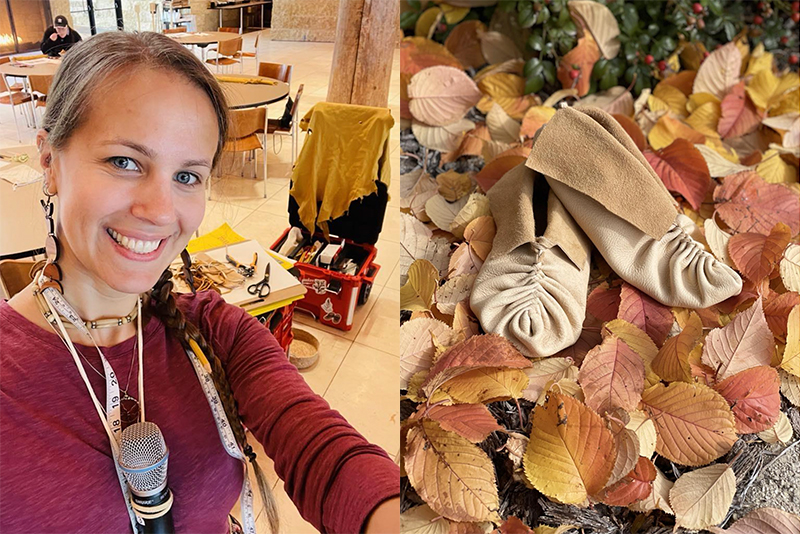
Instructor Rachel Leigh Jeske, a Certified Artisan of Hannahville Indian Community—Potawatomi, will teach participants how to make center seam-style moccasins.
This is a beginner-level workshop; no previous experience needed. Each participant will make a pattern from their own foot, cut the pattern out of leather, and construct the moccasin. Participants should be prepared to take their shoes off to trace their feet and take measurements.
Cost and Reservations
$125
Cost will cover all class materials and instructions. Each participant will leave with their own pair of center-seam moccasins. Class size limited to 15 people.
Science on Tap
Thursday, November 19, 2026
6 p.m. social hour, 7 p.m. lecture
"Oneida Bird Monitoring Program - Connecting Community Science, Oneida Knowledge, & Land Management"
With Tony Kuchma (Oneida Nation Environmental), Tehahukótha (Randy) Cornelius (Oneida Nation Cultural Heritage), and Erin Giese (UW-Green Bay Cofrin Center for Biodiversity)
Introduction to Indigenous Traditional Ecological Knowledge (ITEK)
Saturday, November 14
11 a.m. — 3 p.m.
MPM’s Manager of Tribal Relations James Flores (Oneida Nation) will provide an overview of Indigenous Traditional Ecological Knowledge and some of the ways plants are an example of ITEK among the Menominee, Potawatomi, and Oneida Nations. This program draws on documentation collected by MPM curator Huron Smith during his meetings with Tribal representatives in the 1920s-30s, highlighting traditional plant knowledge and the names of plants in their respective Tribal languages.
Located on the Second Floor
Activities and Storytimes for Early Learners
(recommended for ages 3-6)
Saturday, November 14
11 a.m. — 3 p.m.
Museum educators will lead hands-on activities and storytimes that celebrate Indigenous cultures.
Storytimes will take place at selected times throughout the day.
Located in the Early Learning classroom under the Grand Staircase on the Ground Floor
NAGPRA Virtual Lecture
Wednesday, November 18
6 — 7:30 p.m.
"Returning to the People: How MPM works with Indigenous groups to bring their history and ancestors home"
With Dawn Scher Thomae, MPM’s Curator of Anthropology Collections
The Native American Graves Protection and Repatriation Act (NAGPRA), passed in 1990, has forever changed the way museums collect, interpret, and care for Native American items. This free, virtual lecture will provide a brief overview of the law, how MPM works with the US government and Native groups, and the ways that NAGPRA has impacted MPM’s collections, exhibits, and programs.
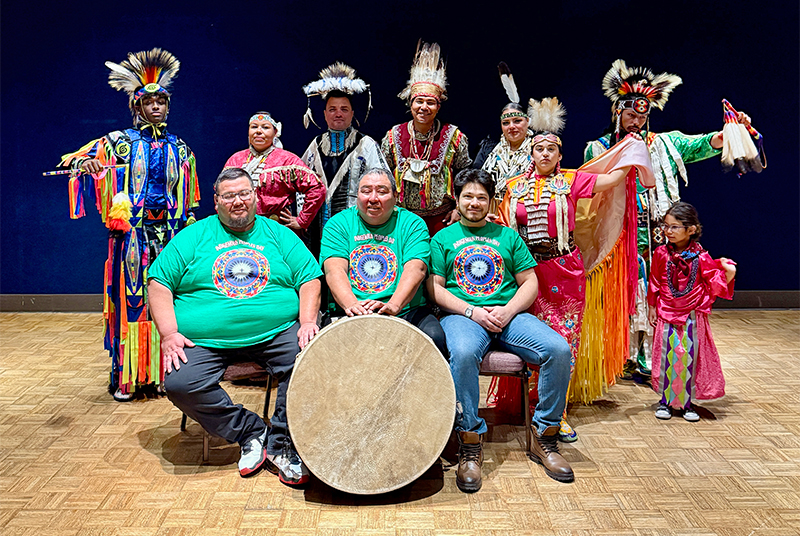
3 Rivers Powwow
Saturday, November 21, 2026
Noon - 7 p.m.
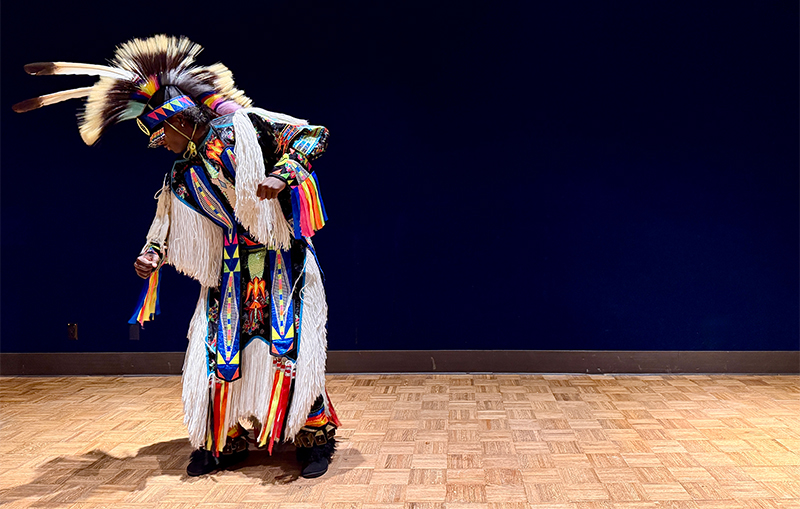
The 3 Rivers Powwow is back! Celebrate Native American history, culture, and living traditions through song, dance, art, and community. Dancers dressed in beautiful regalia will showcase various dance styles to songs shared from different Wisconsin drum groups. Visitors can also support many amazing Indigenous artisans who will have a wide selection of items for sale. This unique event is open to EVERYONE.
Ongoing Programs
Guided Exhibit Tour
Every Saturday at 1 p.m. (no tour November 21)
Go on a free, half-hour tour through MPM’s exhibits to explore the Indigenous foods of North America, many of which are staples in our home today. Meet at the Second Floor elevator lobby.
Education Stations
Wednesdays-Fridays, 11 a.m. — 3 p.m.
Museum educators will be on the exhibit floors to engage visitors in learning opportunities and hands-on activities about the following topics:
The Wonders of White Corn
Which properties make Oneida white corn unique and special? We’ll discuss how it differs from other corn varieties and why it’s important to the Oneida.
Manoomin
Manoomin, or wild rice, has long been an essential staple in many Indigenous cultures and communities. Learn more about the food that grows on water, how it is harvested and prepared, and the work that is being done to preserve manoomin for future generations.
Botany for Breakfast: Maple Sugaring
Look at the science behind maple-sugaring and explore its long Indigenous history. Learn where maple sap comes from, how trees make it, and how people have utilized it for hundreds of years.
Birchbark and Menominee Forestry
Explore the versatility and longstanding use of birch while also learning about modern Menominee forestry practices that help keep ecosystems healthy.
Additional Resources
Download this bookmark loaded with a booklist curated by MPM Education staff!
Exhibits & Collections
A Tribute to Survival
Learn more about a modern-day powwow grand-entry scene through this lifelike diorama which uses models of actual local Native people.
Southwest
Learn more about what life was like in the late 1800s and early 1900s on the Hopi reservation in Arizona. Today, the Hopi still live in their reservation lands of almost 2 million acres.
Moccasins
The Museum's collections include moccasins from the 1800s to the early 1900s from the Oneida, Menominee, Potawatomi, Ojibwe, and Ho-Chunk Nations. Explore some of the features that indicate Tribal affiliation such as patterns, beadwork, construction style, and more.
Manoomin
Indigenous peoples have harvested manoomin, or wild rice, for generations. Wild rice can teach us about the relationship between humans and the environment, including how human choices can threaten natural resources. Discover how western science and Indigenous knowledge can work together to preserve wild rice for future generations.
Kwakiutl
Learn more about the Kwakiutl people, who traditionally lived along the Pacific Ocean in what is known today as British Columbia, and whose lifeways and environment are depicted in many of our Second Floor Native American exhibits.
Generous support for Native American Heritage Month provided by: