

Cosmic Curiosities
"All is well, provided the light returns and the eclipse does not become endless night. Dawn and resurrection are synonymous. The reappearance of the light is the same as the survival of the soul."
- Victor Hugo, 19th-Century French Writer
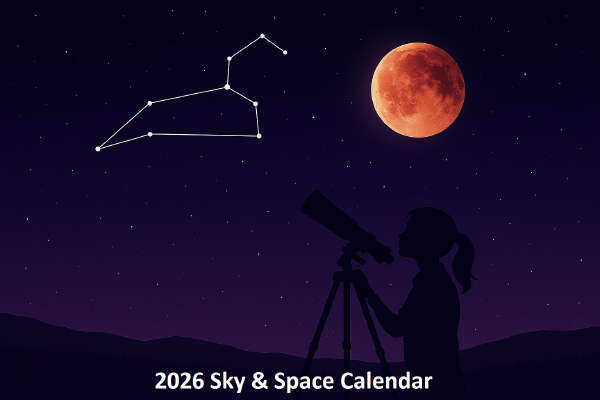
2026 Sky & Space Calendar
January
- January 3: Earth at perihelion, closest point to the sun, 91.4 million miles; Supermoon, 7% bigger than average full moon
- January 5: Latest sunrise: 7:23 a.m. CST in Milwaukee
- January 6: Venus at superior conjunction—behind the sun—moving to evening sky
- January 9: Mars at superior conjunction—behind the sun—moving to morning sky; Jupiter at opposition, opposite the sun, visible all night
- January 19: 20th anniversary of New Horizons launch to Pluto; arrived July 2015
- January 28: 40th anniversary of tragic Space Shuttle Challenger disaster

Artemis II crew; credit: NASA
February
- February 5: Possible Launch of Artemis II—10-day, four-crew mission to orbit Moon
- February 11: 10th anniversary Gravity Waves discovery, 100 years after Einstein's prediction
- February 17: Chinese New Year—Year of the Horse; second new moon after winter solstice; annular solar eclipse—Antarctica, south Indian Ocean, not visible in Milwaukee

March
- March 3: Total Lunar Eclipse! 3:50 a.m. to 6:27 a.m.
- March 8: Venus and Saturn close in evening sky; “spring ahead!” Daylight Savings Time begins
- March 10: 20th anniversary Mars Reconnaissance Orbiter arrives at Mars, still working
- March 14: Pi Day and Einstein's birthday
- March 20: Spring begins at 9:46 a.m. CDT
- March 25: Saturn at solar conjunction—behind sun—moving to morning sky; 30th anniversary of Comet Hyakutake closest approach to Earth, 9 million miles

First Space Tourist Aboard ISS in April 2001; credit: NASA
April
- April 11: 40th anniversary of Halley's Comet closest to Earth, next pass will be 2061
- April 12: 45th anniversary of the first space shuttle launch—Columbia
- April 19-21: Mercury, Mars, and Saturn close in morning sky
- April 28: 25th anniversary of first space tourist, Dennis Tito, trip to space station (ISS)
May
- May: NASA's Psyche spacecraft gets gravity assist at Mars to reach Psyche asteroid in 2029
- May 5: 65th anniversary of first American in space—Alan Shepard
- May 29: Two brightest planets getting close in evening sky

June
- June 8: Venus and Jupiter closest in evening sky
- June 13: Earliest sunrise, 5:12 a.m. CDT in Milwaukee
- June 21: Summer solstice starts at 3:25 a.m. CDT
- June 27: Latest sunset, 8:35 p.m. CDT in Milwaukee
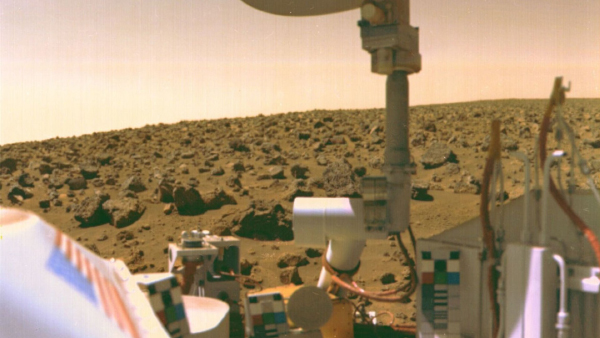
Viking at Mars 1976; credit: NASA
July
- July 4: 10th anniversary of NASA spacecraft Juno orbiter arriving at Jupiter
- July 6: Earth at aphelion, the farthest point from the sun, 94.5 million miles
- July 20: 50th anniversary of first lander on Mars—Viking 1
- July 26: Pluto at opposition
- July 29: Jupiter at solar conjunction—behind sun—moving to morning sky
- July 31: 55th anniversary of first Lunar Rover, or moon buggy, Apollo 15
August
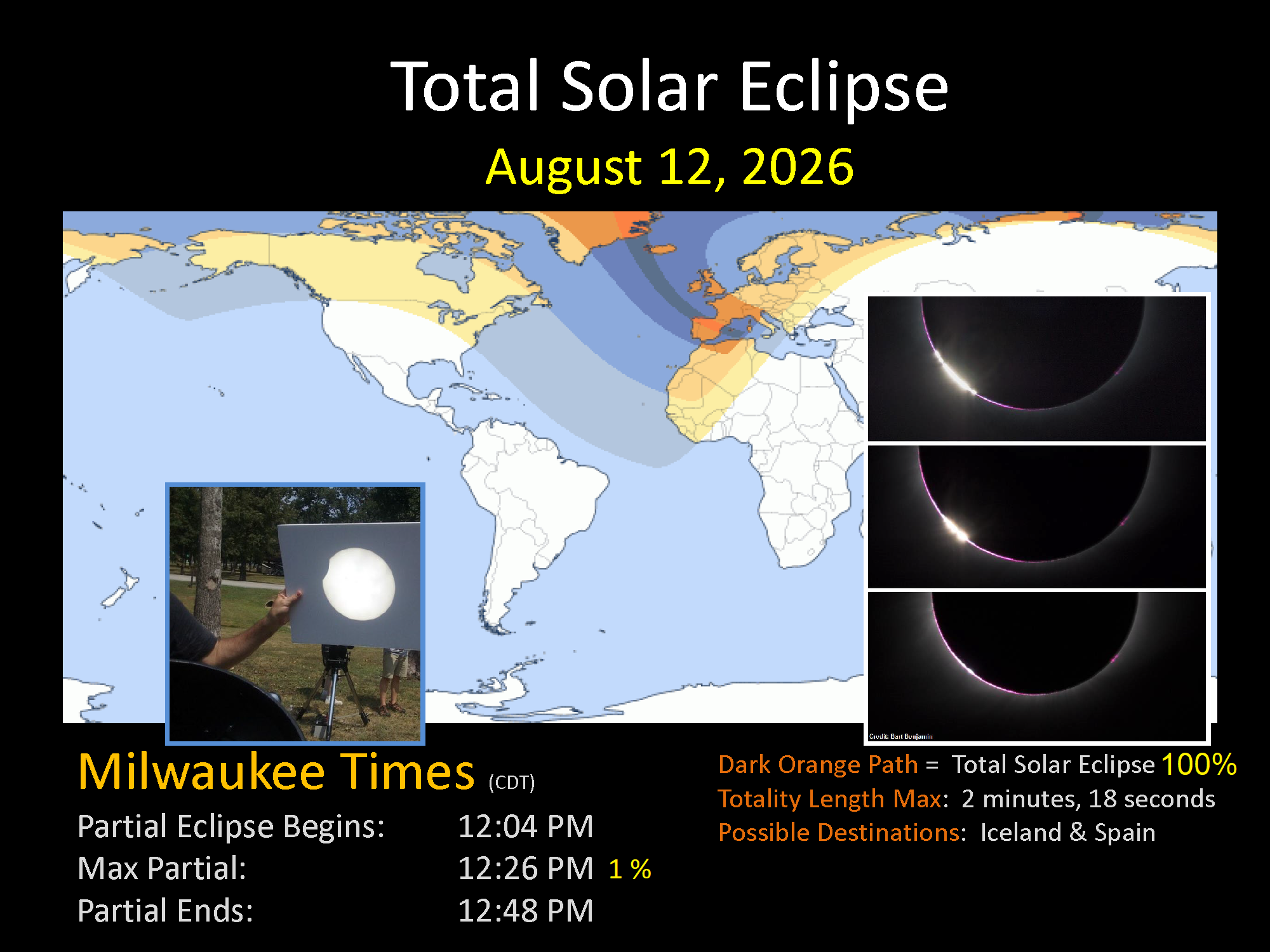
- August 12: Partial solar eclipse Milwaukee—1% 12:04 p.m. to 12:48 p.m.; totality for Iceland and Spain
- August 12-14: Perseids meteor shower peaks
- August 15: Jupiter and Mercury close in morning sky
- August 24: 20th anniversary of Pluto reclassified as dwarf planet by International Astronomical Union (IAU)
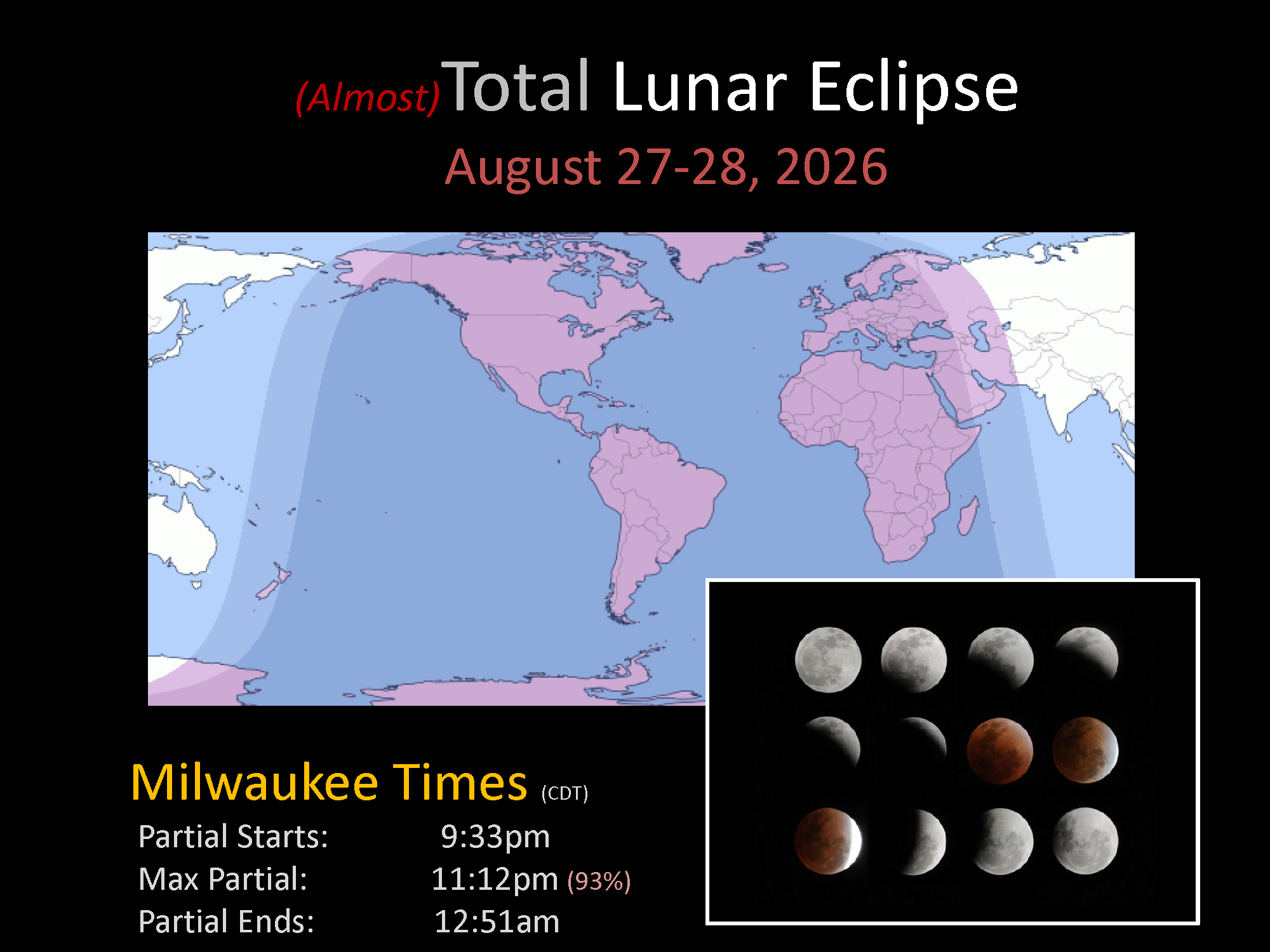
- August 27-28: Almost total lunar eclipse! 9:33 p.m. to 12:51 a.m.
September
- September 22: Fall arrives with the autumnal equinox at 7:05 p.m. CDT
- September 25: Neptune at opposition
- September 29: Jupiter Icy Moons Explorer Juice (ESA) gravity assist Earth, arrives Jupiter 2031
October
- October 3: Saturn at opposition; opposite the sun, visible all night
- October 24: Venus at inferior conjunction, between Earth and sun, moving to morning sky
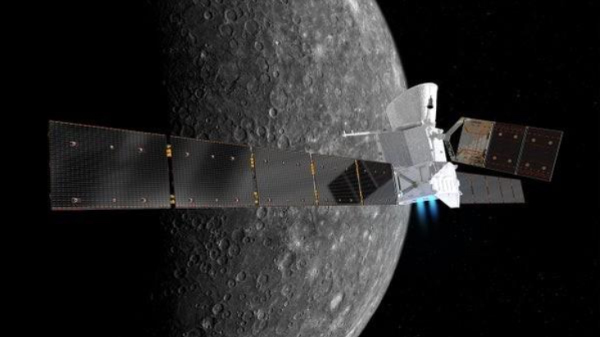
Illustration of BepiColombo at Mercury; credit: ESA and ATG, NASA, and JPL
November
- November: BepiColombo (ESA & JAXA) spacecraft enters orbit of Mercury
- November 1: “Fall back!” Daylight Savings Time ends
- November 14: 55th anniversary of first orbiting spacecraft at Mars, Mariner 9
- November 16: Jupiter and Mars close in morning sky
- November 24: Supermoon, 7% bigger than average full moon
- November 25: Uranus at opposition

December
- December 3: NASA's Europa Clippers gravity assist Earth, arrives Jupiter 2030
- December 8: Earliest sunset, 4:17 p.m. CST in Milwaukee
- December 12-14: Geminid meteor shower peaks
- December 21: Winter solstice starts at 2:50 p.m. CST
- December 23: Supermoon, 7% bigger than average full moon
- December 31: Sirius opposite the sun, up all night
Mercury makes its best evening appearances in late February and all of June. For morning watchers, the best time to catch the smallest planet is late July/early August and mid-November.
Venus slowly becomes visible in the evening sky about mid-February. Look for the brightest planet all spring and summer as it fades back toward the sun in mid-September. Venus quickly returns to the morning sky in November and December.
Mars is still too close to the sun to see until late April. Then, look low in the east in the morning sky. The red planet slowly gets higher in the morning sky. By the end of the year, Mars rises at about 10 p.m.
Jupiter is at opposition on January 9 and is above the horizon all night. By early May, the biggest planet sets about midnight. By the end of July, Jupiter is behind the sun and not to be seen. Look for the second-brightest planet in the morning sky at the end of August.
Saturn hangs on in the evening sky until mid-March and then slowly disappears behind the sun. The ring jewel returns to the morning sky by late April. By late July, it rises by 10 p.m., and by early October, it is at opposition, visible all night long.
Winter in a Hurry
Dealing with the snow and the cold can seem long in winter—but it hurries by quickly, and spring arrives. We get the first flowers at the end of March. Summer, though, feels even longer. Especially when those dog days of August never seem to end. Finally, fall is here. These feelings turn out to be true—astronomically. Winter really is the shortest season in the Northern Hemisphere, and Earth's orbital mechanics are to blame.
Our planet doesn't travel around the sun in a perfect circle. Instead, it follows a slightly squashed oval called an ellipse. In early January, Earth reaches perihelion—the point in its orbit where it is closest to the sun. When we are closer to our star, stronger gravity pulls us along faster, like a skater speeding up when they pull their arms in. Because we move faster at perihelion, we zip through winter in just 89 days. Blink, and you miss it—unless you're shoveling snow, of course.
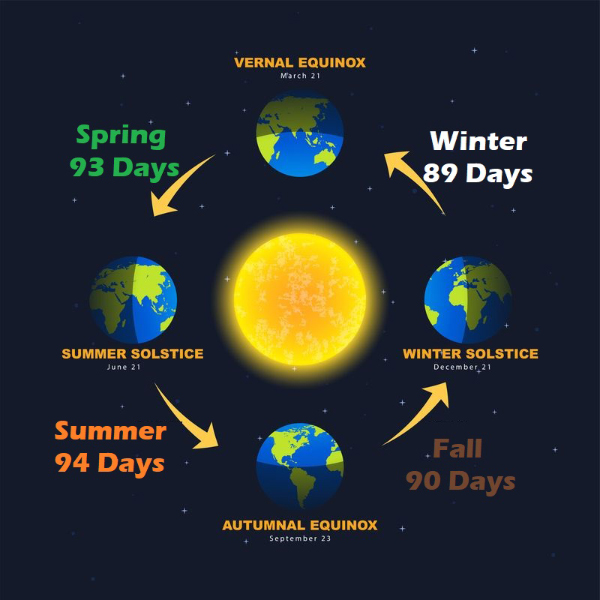
Now, contrast a faster winter with summer. In early July, Earth reaches aphelion, its farthest point from the sun. Farther away means we move more slowly, so Earth takes its time cruising through summer. The result? A luxurious 94-day season of long evenings, warm nights, and excuses for ice cream.
By the way, it's cold in January because the Earth's north axis is tilted away from the sun. It's the Earth's tilt, not distance, that is the reason for the seasons.
Space in Sixty Seconds
Check our our top-ten sky and space events for 2026!
Sky Sights
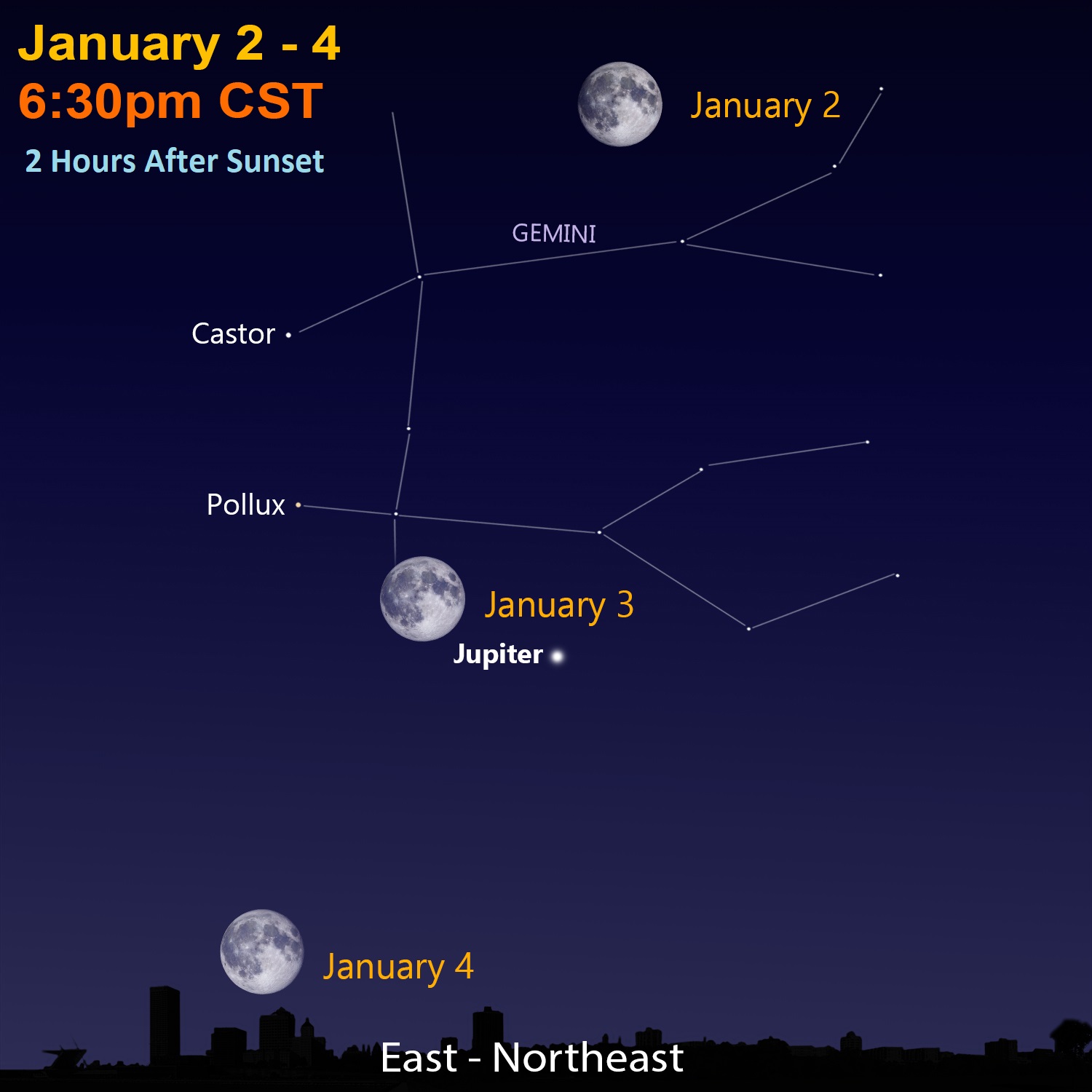
Jupiter and a bright Moon share the sky from January 2 to 4. A supermoon occurs on the night of January 2 and 3 when the moon is slightly bigger, about 7%, due to its elliptical orbit.
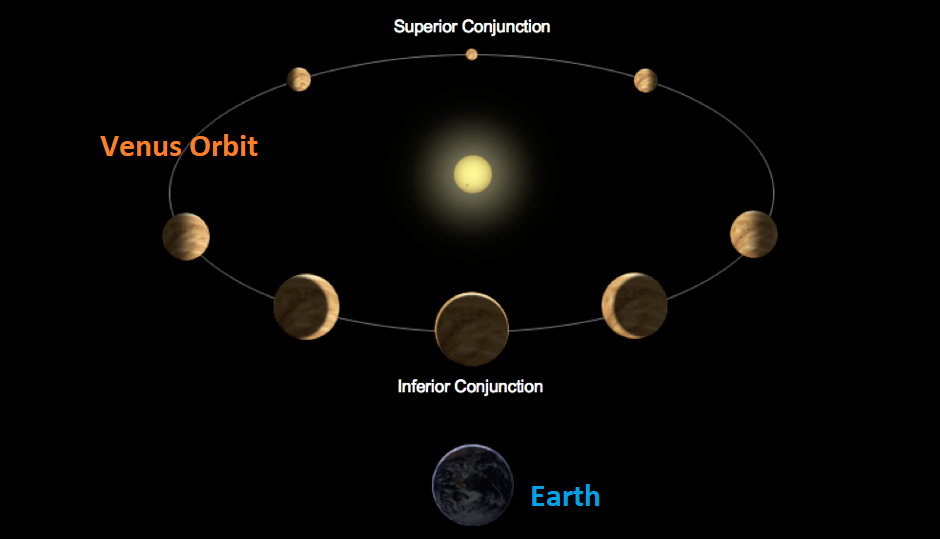
Venus is not visible this month. It is at superior conjunction on January 6. This is when a planet is behind the Sun. Venus is moving to the evening sky and will become easy to see by late February.
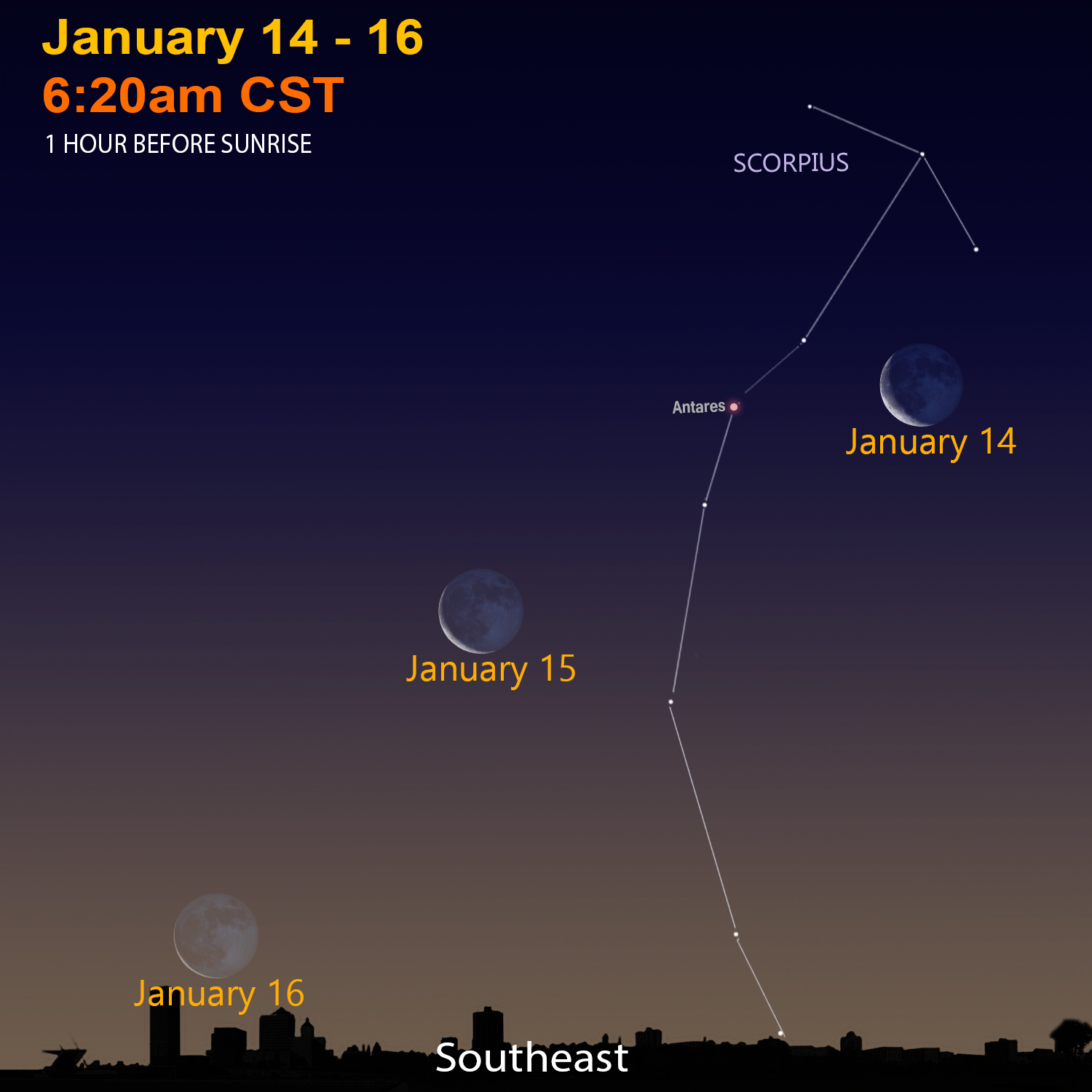
For early risers, watch a waning crescent Moon shine with the bright red star Antares in the constellation Scorpius from January 14 to 16.
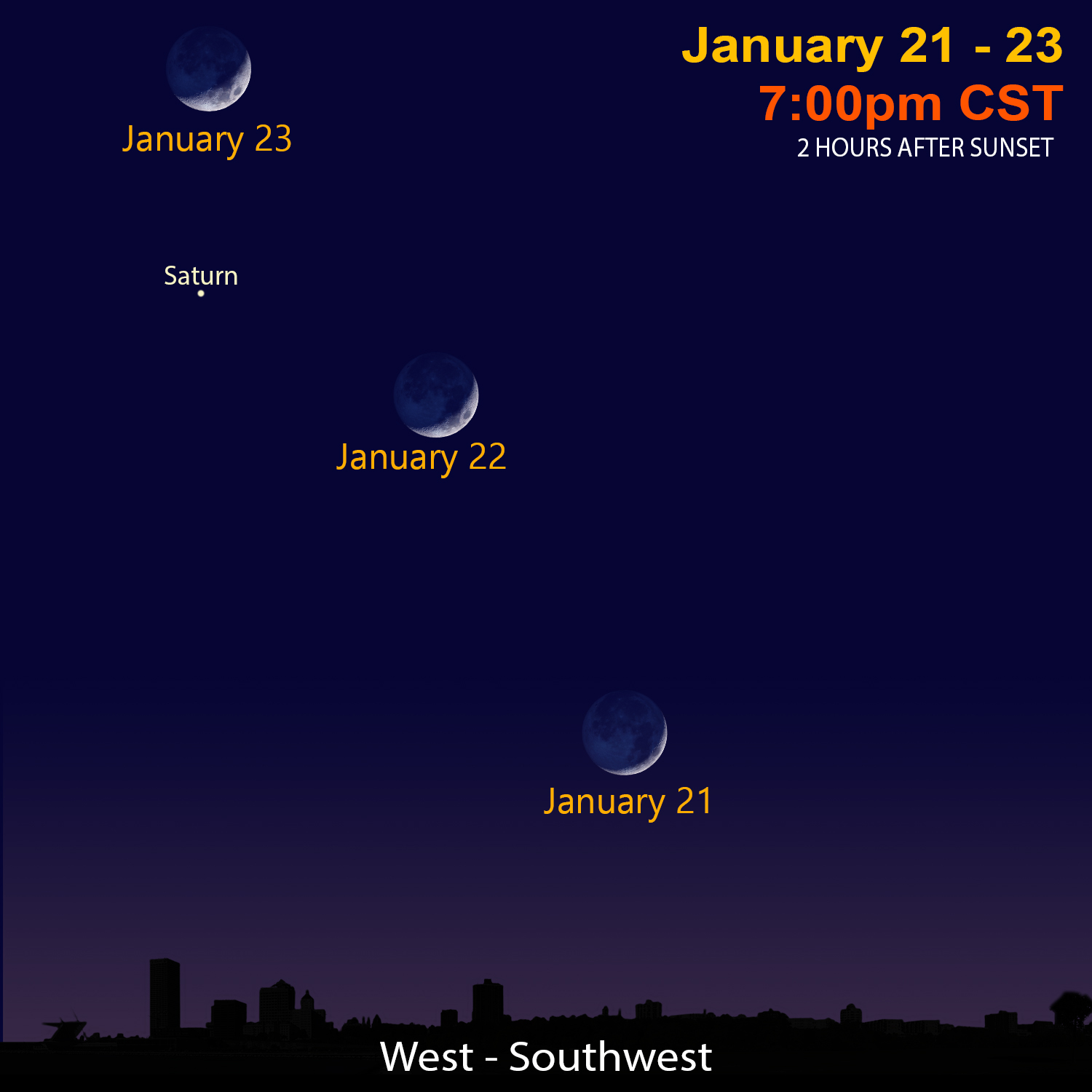
Saturn pairs up with a waxing crescent Moon from January 21 to 23.

A now-waxing gibbous Moon passes the Pleaides—or Seven Sisters—and the bright red star Aldebaran in the constellation Taurus the Bull.
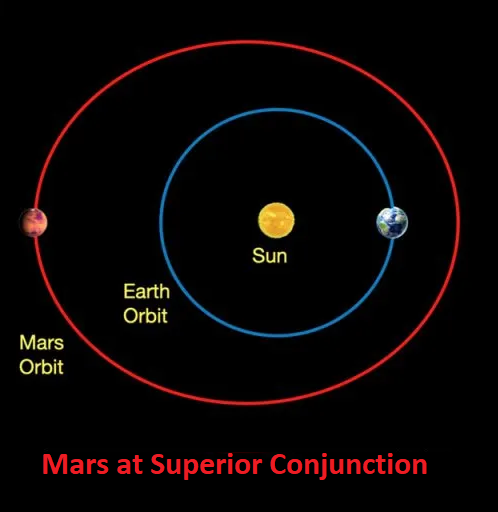
Mars is also not visible this month as the red planet hides behind the sun. It is moving to the morning sky from Earth's perspective but will not become visible until late April.
Mercury is out of sight—too near the sun—all month.
January Star Map
Sign Up
Receive this newsletter via email!
Subscribe
See the Universe through a telescope
Join one of the Milwaukee-area astronomy clubs and spot craters on the Moon, the rings of Saturn, the moons of Jupiter, and much more.
Follow Bob on social media
Twitter: @MPMPlanetarium
Facebook: Daniel M. Soref Planetarium